

Unspoken social rules are the everyday habits that guide how people treat each other: personal space, patience when someone talks, and a tone that matches the room. No one writes these rules down, but a broken one is what makes an interaction feel off. Once you know them, conversations feel natural instead of forced.
Key takeaways
- Most friction in a conversation comes from small things: too little space, an interrupted sentence, or a phone that comes out at the wrong time.
- These rules are not universal. What feels normal in one culture or group can read as rude in another.
- A rule broken by accident does not make someone a bad conversationalist. In most cases it just means no one ever explained it.
- Online chat runs on its own version of these rules, such as the space a message needs before five more land on top of it.
- Practice, more than any list of tips, is what makes social rules feel automatic.
You say something in a group and the room goes quiet for a beat too long. Or you catch yourself standing closer to someone than they seem comfortable with, and you cannot tell if you imagined it. Nobody handed you a manual for this. Most of what makes conversation feel easy or awkward was never written down anywhere. You picked it up over years, through trial, correction, and a few uncomfortable silences along the way.
That gap between what people expect and what gets taught is where most social anxiety lives. You are not bad at people. You just never got the rulebook, because there is not one.
In this article we cover the unspoken rules that shape everyday conversation: what they are, why they matter, and how to get more comfortable with them, online and off.
What are unspoken social rules?

Unspoken social rules are the habits people use without thinking about them, like how close to stand, when to speak, and when to stop. They differ from formal etiquette, which someone teaches you, like which fork to use first. Nobody sits you down and explains unspoken rules. You learn them by watching, by trial, and sometimes by getting them wrong in front of people.
These norms also shift by culture, by community, and even by the specific group of friends you are with. A story that gets a laugh at one table can land flat at another. None of this means someone who missteps is rude. It just means they grew up around different norms, or they have not been in that particular room before.
Why unspoken social rules matter
These rules exist because they save people from constant explanation. When you know the room, you do not have to ask what is okay to say or how close is too close. Conversations move easier because both people are working from the same quiet agreement.
Skip a few of these rules and small misunderstandings pile up fast. A passing comment gets taken as an insult. A question turns into an interrogation. A friendship never gets past small talk. Get comfortable with these rules and the opposite happens: people trust you faster, conversations relax, and relationships hold up better over time.
15 common unspoken social rules everyone should know

1. Give people space
Comfort zones are not the same for everyone, and you cannot always tell where the line sits. Watch for someone stepping back or turning slightly away. That is your cue. Do not close the gap again.
2. Do not interrupt
Let a sentence finish before you jump in. Everyone talks over someone by accident now and then, so the goal is respect, not silence.
3. Notice when a conversation is ending
Shorter answers. A glance at a watch. Eyes drifting toward the door. None of that is rudeness, it is an exit. Let the person take it instead of stretching the moment past where it wanted to end.
4. Ask questions without interrogating
Curiosity keeps things moving, but five personal questions in a row starts to feel like a cross examination. Leave space for the other person to ask you something too.
5. Match the energy of the room
A backyard barbecue calls for a different volume than a client meeting. Read the setting first, then decide how big to be in it.
6. Do not make everything about you
It is fine to share your own stories. Just hand the conversation back afterward. When every reply loops around to your week, your trip, your opinion, people notice, and they pull away.
7. Read the room
Pay attention to reactions, not just words. Silence where you expected a laugh is telling you something. Take the hint and move on instead of explaining the joke.
8. Respect boundaries
If someone says no, or changes the subject, leave it changed. Pushing for the reason behind a boundary is its own small violation, even when it comes from good intentions.
9. Do not overshare too fast
Trust builds in layers, not all at once. Start with easy topics and let the heavier ones surface later, once the relationship can actually hold them.
10. Put the phone away
A screen that keeps pulling your eyes away tells the other person you would rather be elsewhere, whether or not that is true. Glancing down for something urgent is understandable. Doing it every few minutes is not.
11. Remember names
Say the name back once, right after you hear it, and it tends to stick. People notice when you remember theirs. It turns a transaction into something that feels personal.
12. Do not expect instant replies
People get busy, fall asleep, or leave their phone in another room. An unanswered message for a few hours says nothing about the friendship.
13. Give everyone a chance to speak
In a group, notice who has gone quiet. A short, easy question can pull a quieter person back in without putting them on the spot.
14. Know when humor fits
A joke that lands with close friends can fall flat with people who barely know you. Anything aimed at someone’s appearance or identity is off the table. Watch how the first joke lands before you build on it.
15. Be polite without overthinking it
Please, thank you, excuse me, the basics still carry weight. Do not get so focused on the rules that a conversation starts to feel scripted. Genuine consideration beats perfect execution.
Unspoken rules for making friends
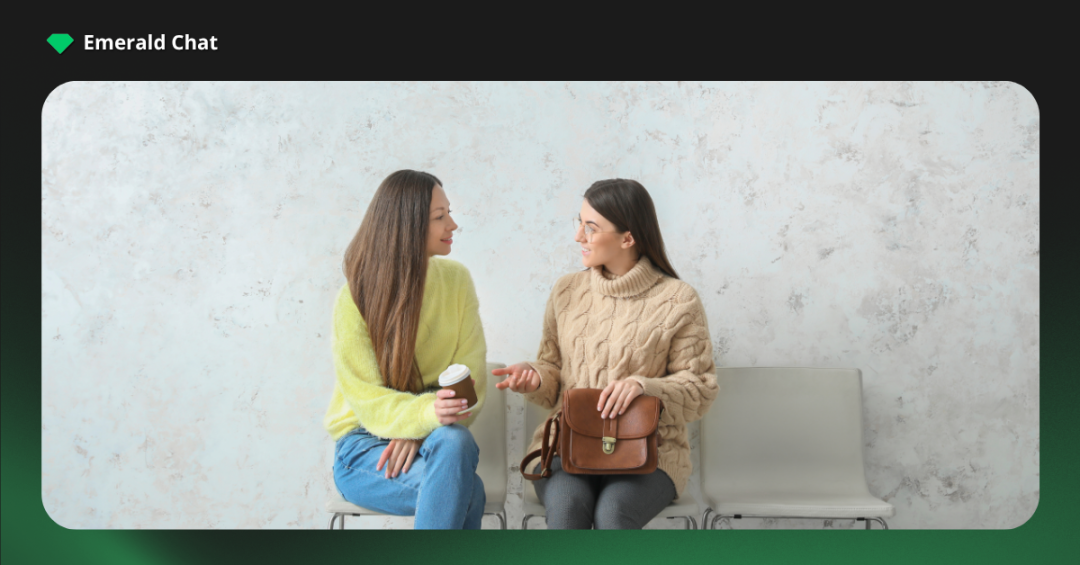
Making friends as an adult runs on different rules than childhood. Nobody assigns you a friend group anymore, so the work falls on you. Show real interest in what someone says, then follow up after a good interaction: a text, a mention of something they said, proof you were listening. Do not expect instant closeness. Most real friendships build slowly, through repeated contact and consistency, not one great conversation.
Unspoken rules for online conversations

Text strips out tone, so a short reply can read as cold when it is not. Give people the benefit of the doubt before you assume anger or disinterest. Skip sending five messages in a row when one will do, and hold off on anything too personal before trust has had time to build.
Emerald Chat is built around this kind of practice. Interest based matching puts you in a conversation with someone who already shares common ground, which takes some of the edge off the early, awkward part of talking to a stranger.
Unspoken rules for group conversations

Group settings add a layer most people forget about. There is an audience now. Do not run the whole conversation yourself, and do not let someone else get boxed out either. Listen when it is not your turn, and think twice before you raise something sensitive in front of people who might not want to discuss it. A group conversation that flows well usually means everyone is watching for these small openings, not just waiting for a turn to talk.
What counts as normal can change by culture
Personal space, eye contact, how direct people are, even how physical a greeting is, none of it is fixed. Warmth in one culture can come across as too much in another. Reserve that feels cold in one place is just normal somewhere else. There is no single correct version of these rules, only the version that fits the room you are in.
What to do if you break an unspoken rule
Everyone breaks one of these at some point. If you catch yourself doing it, skip the spiral. A short, plain acknowledgment, or a quiet apology if the moment calls for one, settles it faster than a long explanation. Learn from it and move on. Most people forget an awkward moment far faster than the person who caused it.
How to get better at reading social situations
This is a skill, not a fixed trait. Watch how people you admire handle a room. Pay attention to tone and body language, not just words, and ask someone you trust for honest feedback once in a while. Then put yourself in front of it, since reading about a conversation and having one are not the same thing.
Emerald Chat gives you a low stakes place to practice. Random video chat with a stranger who does not know your history means you can try a new opener or recover from an awkward pause without it following you anywhere.
Trust what the conversation is showing you
None of this is about memorizing fifteen rules and running through a checklist mid conversation. It is about attention: to space, to tone, to the small signs that someone is at ease or is not. Most people already read a good chunk of this without noticing.
Awkward moments happen to everyone, including people who look at ease in a room. What changes with practice is not perfection. It is recovery: how fast you notice, adjust, and keep talking. That skill grows the more conversations you have, not the more you read about having them.
Want to practice some of this in a low pressure setting? Add a few interests to your Emerald Chat profile and start a conversation with someone new. The room will teach you more than any list ever could.
Frequently Asked Questions
What are examples of unspoken social rules?
Personal space, letting a sentence finish before you respond, sensing when a conversation is close to over, and matching the tone of a room are common examples. None of these get written down anywhere. Most people pick them up through repeated interaction, correction, and a fair number of awkward moments along the way.
Why are unspoken social rules hard to understand?
No one teaches these rules directly. You pick them up through experience, and that experience differs by family, culture, and social group. Someone raised in a quiet household might see a loud, joking group as rude, when for that group, it is just normal warmth.
What is the most important unspoken social rule?
If there is one that matters most, it is respect for other people’s boundaries. Personal space, a change of subject, a simple no: honoring these builds more trust than any single conversation tactic. Most other rules are variations on this same idea.
How can I get better at social situations?
Watch how people around you handle conversation, then practice in low stakes settings. Active listening and a willingness to talk to people you do not already know both help more than any list of tips. Emerald Chat is a practical place to try this, since every conversation starts with a stranger.
Is it normal to not understand social cues?
Yes. Reading social cues is a skill, and skills improve with practice, not with age alone. A missed cue here and there does not mean something is wrong with you. Treat an awkward moment as information, not proof that you are bad at this.
Leave a Reply